 How-to
How to Keep Beach Drinks Cold: A Practical Packing Guide
Last Updated: 22 November 2026
Quick Summary
You keep beach drinks cold by pre-chilling everything, packing a well-insulated cooler tight with ice and frozen bottles, and keeping the lid shut. Start cold and stay cold, and set the cooler in a shallow hollow in the sand out of the wind.
- Pre-chill drinks in the fridge overnight and cool the empty cooler before packing.
- Layer block ice or gel packs on the bottom, drinks in the middle and crushed ice on top.
- A hard cooler holds cold for 12 to 24 hours with block ice; a soft bag for 4 to 8 hours.
- Drain meltwater whenever you notice it pooling, as it speeds up the melting of ice above.
- Without ice, use vacuum-insulated bottles, frozen gel packs, shade and a towel wrap.
Table of Contents
- How Do You Keep Beach Drinks Cold?
- How to Pack a Cooler for the Beach
- How Long Do Drinks Stay Cold in a Cooler?
- Best Ice Packs for a Beach Cooler
- How to Keep Drinks Cold Without Ice
- Stocking Up Before You Hit the Sand
- Frequently Asked Questions
How Do You Keep Beach Drinks Cold?
You keep beach drinks cold by pre-chilling everything, packing a well-insulated cooler tight with ice and frozen bottles, and keeping the lid shut. That is the whole method.
Heat is the enemy. Direct sunlight, warm air and an open lid all push cold air out fast.
Below, we show you exactly how to pack, how long drinks last, and how to manage without ice.
How to Pack a Cooler for the Beach
Packing a cool beach cooler is about order, density and a plan matched to how long you will be out. Cold air cannot stay in a box full of gaps.
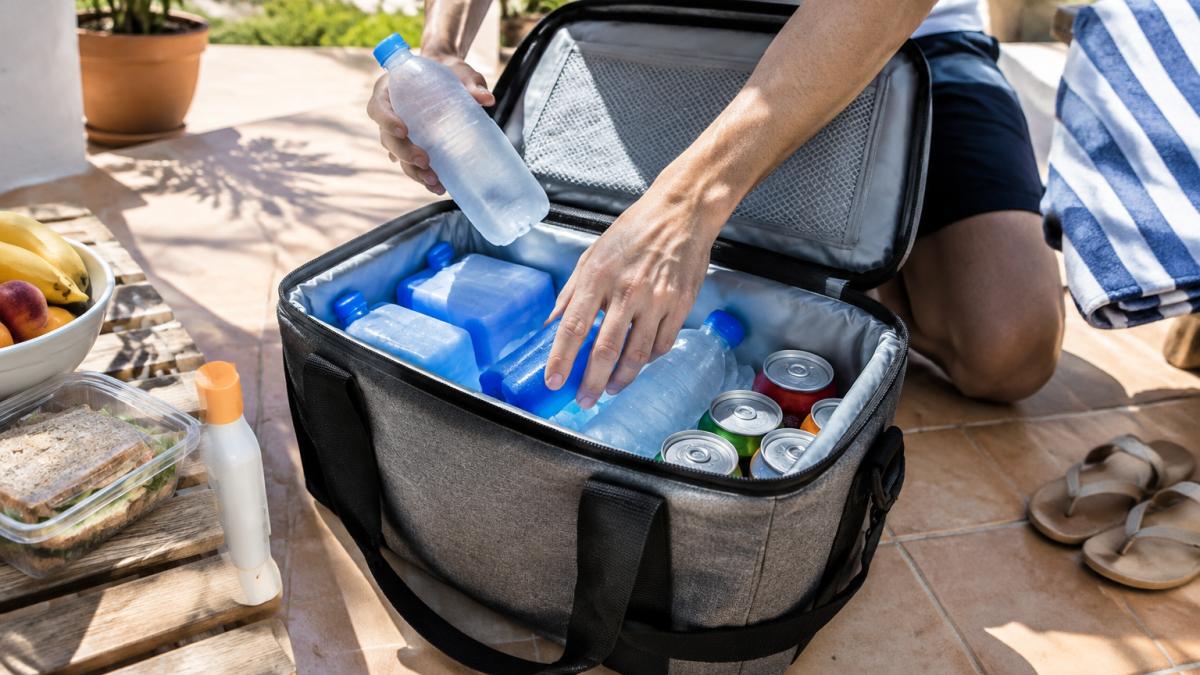
Pre-Chill Everything Before It Goes In
Pre-chilling is the step most people skip. Pre-chill means cooling your drinks and cooler before you pack them. Put bottles in the fridge overnight. Add a bag of ice to the empty cooler an hour before you leave, then tip it out.
- Chill drinks in the fridge the night before
- Store the empty cooler in a cool spot, not a hot car
- Freeze water bottles for later in the day
Watch out: a cooler left in a hot car boot overnight will be warm at the walls, and that warmth melts your first layer of ice within the hour.
Layer Ice, Drinks and Frozen Bottles
Layering is the order you stack things. Ice goes on the bottom, then drinks, then more ice on top. Frozen water bottles work twice: they chill the food and become cold drinking water as they melt.
- Bottom: a layer of block ice or frozen gel packs
- Middle: drinks and food, packed tightly with no air gaps
- Top: crushed ice to fill the spaces
A Packing Plan by Trip Length
Most guides stop at the layering diagram. The practical question is how much ice and how many bottles to take for the hours you plan to spend on the sand. The quantities below assume a family of four and a cooler that is roughly two-thirds full once packed.
Short visit (two to four hours, morning or late afternoon)
- One frozen 1.5-litre water bottle per two people, plus four to six chilled cans or small bottles
- One flat gel pack lining the bottom
- No loose ice needed if the cooler is pre-chilled and kept shut
Full day (six to ten hours, including lunch)
- Two frozen 1.5-litre bottles, one block ice of about 1kg, and four gel packs
- Chilled drinks for the morning on top, backup bottles underneath
- A separate small insulated bag for lunch so the main cooler stays closed
Multi-day or all-day-plus-evening trip
- A hard cooler rather than a soft bag, packed the night before with block ice at the bottom
- Two blocks of about 1kg each, four frozen bottles and a full set of gel packs
- Drinks for day one on top, day two drinks frozen solid underneath
Packing Sequence That Works on Sand
On the beach you will open the cooler standing on soft sand, often with wind blowing grit into the lid. A sequence that keeps the lid open for the shortest possible time matters more than a perfect diagram.
- Pre-chill the cooler, then tip out the meltwater before you leave
- Put block ice or gel packs flat on the bottom
- Stand bottles and cans upright and tight, filling every gap with frozen bottles rather than air
- Add a layer of crushed ice only across the top, not throughout
- Close the lid and carry the cooler by both handles so the seal does not twist
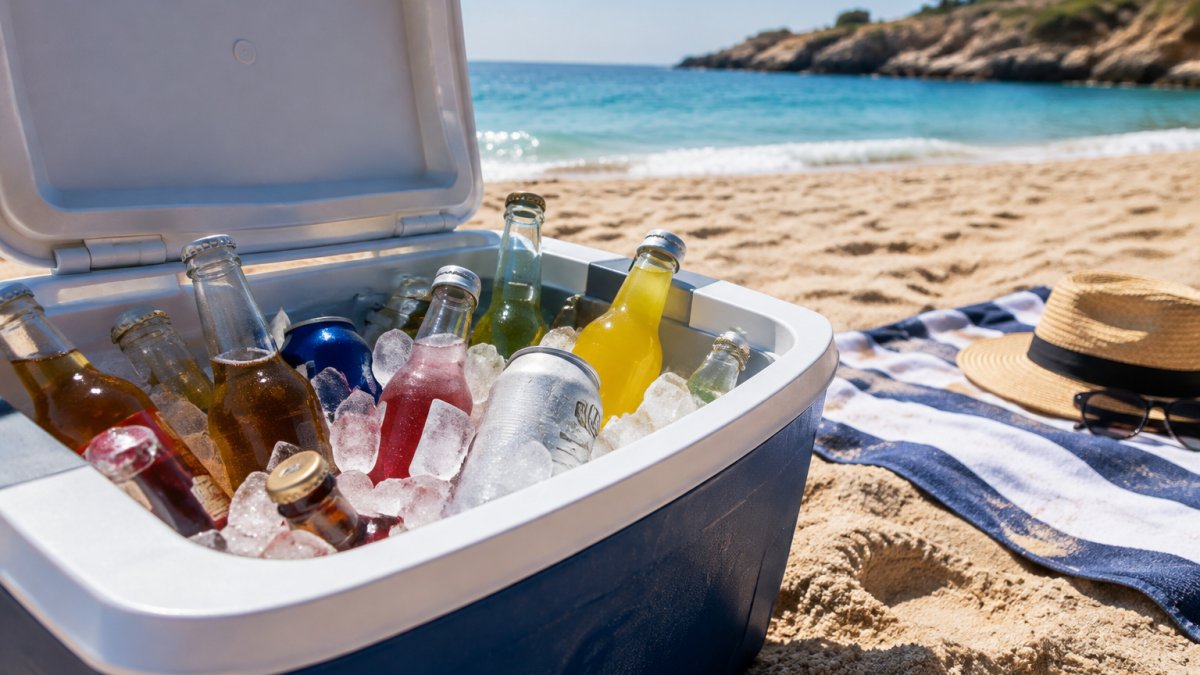
- At the beach, dig a shallow hollow in the sand and set the cooler in it, out of the wind, with a towel over the lid
Watch out: a cooler set directly on hot sand loses cold through its base faster than one set in a shallow hollow or on a folded towel.
How Long Do Drinks Stay Cold in a Cooler?
Drinks stay cold in a good cooler for several hours, and longer in a high-quality hard cooler packed with block ice. A cheap soft bag in direct sun may hold cold for only a few hours. Those ranges only mean something once you know which cooler type you are carrying and how it behaves on sand.
Cooler Types Compared by Realistic Performance
The table below compares the four containers most people actually take to the beach. Cooling durations assume the cooler is pre-chilled, packed tight with block ice or gel packs, kept in shade and opened no more than a handful of times.
| Container | Typical capacity | Portability on sand | Realistic cold-holding time | Best for |
|---|---|---|---|---|
| Hard cooler (thick walls, sealed lid) | 20-45 litres | Heavy; needs two hands or a trolley | 12-24 hours with block ice | Full day, family, food plus drinks |
| Soft cooler or insulated bag | 10-25 litres | Light; shoulder strap, easy over sand | 4-8 hours with gel packs | Short visit, couple, drinks only |
| Insulated bottle or vacuum flask | 0.5-1 litre | Carried in a bag | 6-12 hours for the liquid inside | Personal water, no shared cooler |
| Standard rucksack with a towel wrap | Any | Lightest | 1-3 hours at best | Last-minute trip, drink soon |
A hard cooler wins on duration but loses on the walk from the car. A soft cooler is the opposite trade-off.
What Actually Shortens Cold-Holding Time
Several things decide ice retention:
| Factor | Helps cold last | Hurts cold retention |
|---|---|---|
| Cooler type | Hard cooler, thick walls | Thin soft bag |
| Ice type | Block ice, gel packs | Loose crushed ice |
| Packing | Packed tight, no gaps | Half-empty with air gaps |
| Location | Shade, out of sun | Direct sunlight |
| Access | Lid kept closed | Opened often |
| Base contact | Cooler on a towel or in a hollow | Cooler on hot sand |
For a day trip, a well-packed cooler with block ice and frozen bottles is enough. For a longer stay, plan to top up ice at lunchtime.
Setting Realistic Expectations
A common pattern is that people overestimate a soft bag and underestimate how much opening the lid costs. Each time you open a cooler in full sun, the cold air spills out and warm air replaces it; a box opened ten times over an afternoon will lose cold noticeably faster than one opened three times.
Watch out: meltwater left in the bottom of a cooler speeds up the melting of the ice above it, so drain the plug whenever you notice water pooling.
Realistic cold-holding time by container type
Best Ice Packs for a Beach Cooler
The best ice packs for a beach cooler are reusable frozen gel packs and frozen water bottles. Gel packs stay cold longer than loose ice and do not leave meltwater. Frozen bottles double as backup drinks.
- Frozen gel packs: flat, reusable, good for lining the bottom and sides
- Frozen water bottles: free cooling plus cold water later
- Block ice: slowest to melt, best for all-day cooling
Skip single-use plastic ice where you can. Reusable packs cut waste and keep the sand cleaner. A sealed lid on every bottle also stops leaks soaking your snacks.
How to Keep Drinks Cold Without Ice
You can keep drinks cold without ice using a vacuum-insulated stainless steel bottle, a pre-chilled cooler, and shade. Vacuum insulation is a double wall with a gap that slows heat transfer. A good stainless steel bottle holds cold water for hours on its own.
- Fill insulated bottles with ice-cold water before you leave
- Keep the cooler in shade, never in direct sunlight
- Wrap the cooler in a towel for extra insulation
This approach suits short trips and small families. For a full day with food, ice packs still win.
Stocking Up Before You Hit the Sand
The easiest way to keep beach drinks cold is to buy them already cold.
Pick up cold bottles, a bag of ice and fresh bread the morning of your trip. Pack tight, layer well, and keep the lid closed.
Ready to enjoy a worry-free beach day? At Supermercado Spar de Cala Marsal we stock chilled drinks, fresh bakery bread and takeaway bocatas just steps from the sand.
Frequently Asked Questions
Should you freeze water bottles before taking them to the beach?
Yes. Freezing water bottles the night before gives you two benefits: the ice keeps the rest of your beach drinks cold, and the bottles slowly melt into cold drinking water. Fill bottles about three-quarters full so the water has room to expand, and pack them at the bottom and around the edges of the cooler. They work best for trips of six to twelve hours, and they cut down on single-use plastic because you refill and reuse the same bottles all holiday.
How much ice do you need for a day at the beach?
A practical rule is roughly one part ice to two parts drinks by volume, so a 20-litre cooler needs about 6 to 7 litres of ice or frozen packs. Use block ice or frozen gel packs for the base and crushed ice to fill the gaps between bottles. Pack drinks tightly so there is little warm air left inside, and keep the lid sealed between servings. On very hot days, add one extra frozen bottle as a reserve.
Does wrapping drinks in a wet towel keep them cold?
It helps, but only for a short time. A wet towel around a bottle uses evaporation to pull heat away, which can keep a drink cooler for an hour or so in breeze or shade. It will not replace a cooler for a full beach day. Use it as a top-up trick for the bottle you are drinking right now, and keep the rest of your beach drinks in the insulated cooler with the lid closed.
How can you keep a cooler cold in the sun?
Place the cooler in shade, ideally under a parasol or towel, and never leave it in direct sunlight. Put a light-coloured cover or towel over the lid to reflect heat, and open it as little as possible, taking out several drinks at once rather than rummaging. A vacuum-insulated bottle for your current drink means the cooler stays sealed. Choosing a soft cooler with thick insulation and a well-fitting lid makes the biggest difference on hot days.
